Imagine changing a priority on Monday. By Thursday, another team has finished work that only made sense under the old plan.
Someone wrote down the decision and shared the notes. Everyone kept working, but the change never reached that team’s plan.
How to keep teams aligned is something I want to understand as we bring more AI into companies. We can make it easier to write a plan, analyze a problem or build a tool. How do we make sure people understand what matters and know when to change what they’re doing?
I run a software company, so I have a fairly strong incentive to believe there is software to build here. There may be. First, I want to understand which part of this problem leaders struggle with.
What does “faster” mean?
Take a simple instruction: make onboarding faster.
One person hears that the customer should get something useful sooner. Another hears that their team should spend fewer hours setting things up. A third hears that more customers should get through the process each week.
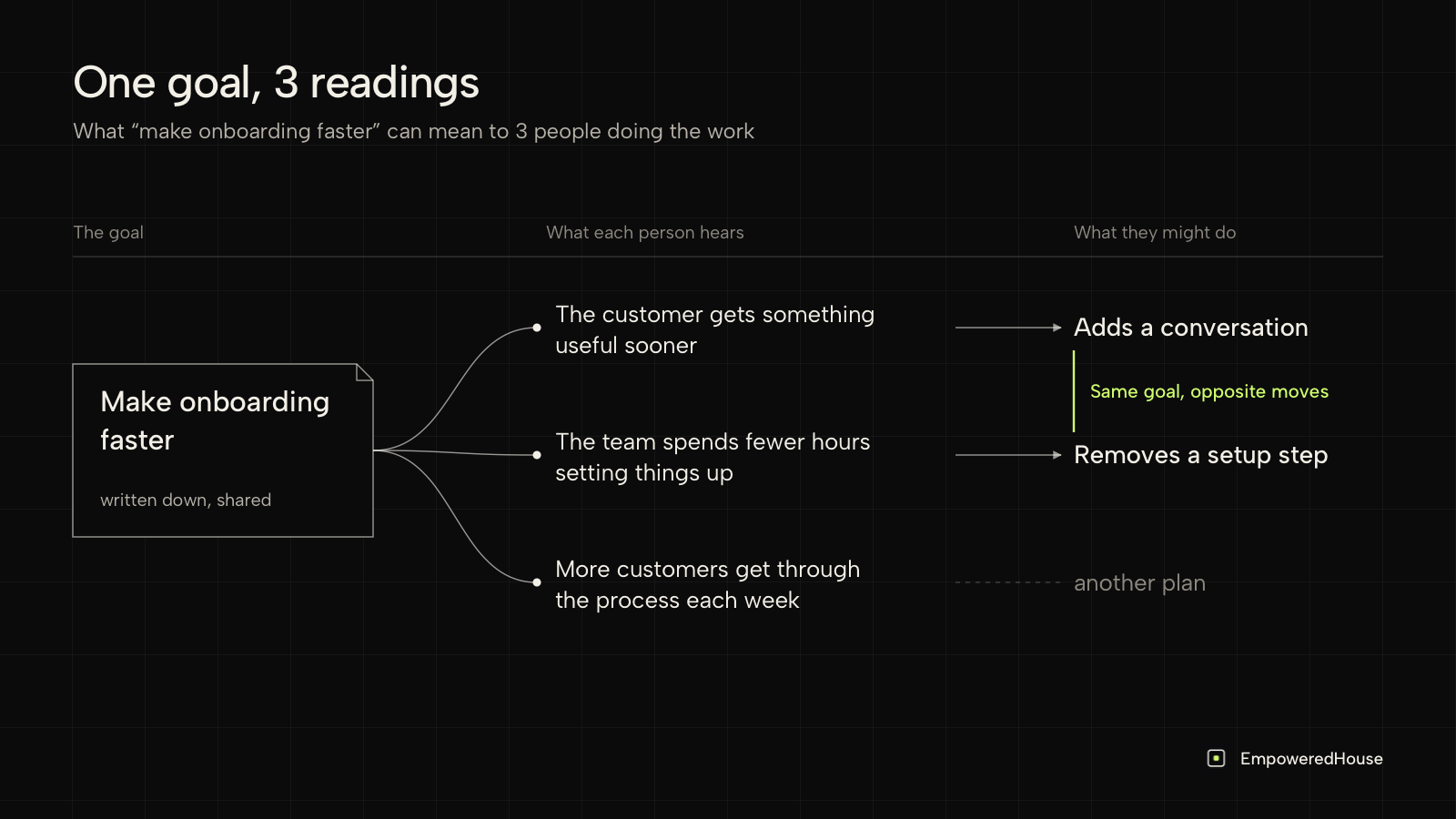
Someone might remove a setup step to save time. Someone else might add a conversation because it helps the customer succeed. Both can point to the same goal and explain why they did the right thing.
For me, alignment starts when we talk through that difference. We need to agree on what we’re trying to improve, what we’re willing to give up and what each person can decide without coming back to me.
Writing the goal down gives us something to work with. We still have to find out what it means for the people doing the work.
Count the reviewer’s afternoon too
Suppose both people now have AI helping them. One can redesign the setup process quickly. The other can build a better customer guide. They can each get further before anyone notices that they’re working toward different results.
I don’t know how often AI makes that gap worse. I also don’t want to assume that saving time for one person means the company has become more effective.
In a field experiment across 66 firms, workers received access to AI inside tools they already used. The researchers found individual time savings, but didn’t detect changes in how many tasks people did or the mix of tasks they worked on.
If I use the time I save to send you more proposals, and you need another afternoon to review them, we should count your afternoon too. If those proposals help us make a better decision, that may be a good trade. We need to follow the work far enough to find out.
Who needs to change their plan?
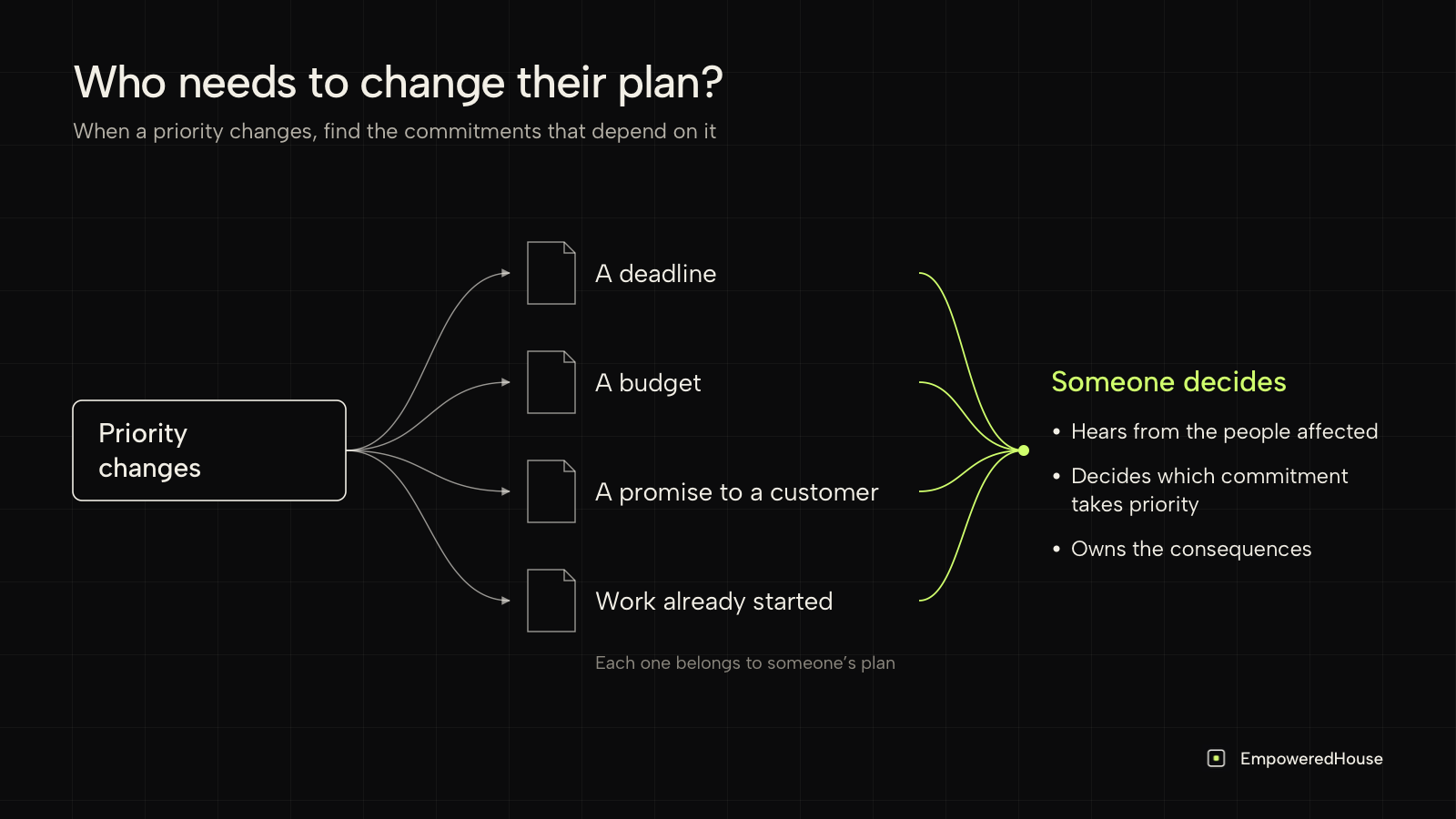
When a priority changes, I want to know which commitments depend on it.
A message in a channel may leave people to work out whether it changes their deadline, their budget, a promise to a customer or work they have already started. Sometimes we need a difficult conversation, because changing my priority creates a problem for your team.
I think AI could help us find those connections. It might show that two plans rely on different assumptions and bring up the reasoning behind each one.
Somebody still needs to hear from the people affected, decide which commitment takes priority and own the consequences.
I’d judge the tool by what happened after its alert. Did we resolve the conflict earlier? Did we avoid work we would otherwise have thrown away? And how much time did we spend checking whether the alert was right?
I might have made the wrong call
I don’t want alignment to mean that everyone keeps returning to what I wanted at the start.
A team may learn something from a customer that changes the case for the work. They may discover that a deadline depends on an assumption we should never have made. If they keep following the plan because it is the safest way to look aligned, we have a management problem.
I want people to be able to show me why the plan no longer makes sense. They need room to challenge the decision and enough of its original reasoning to explain what changed.
I’d want AI to help us question the goal too. Otherwise we could spend less time finding information and more time defending a decision we should have changed.
How to keep teams aligned: the questions we want to answer
At EmpoweredHouse, we’re putting together the questions we want to explore with other leaders:
- How do you know people understand what a goal means for their own work?
- When a decision changes, how do the people affected find out what they need to do differently?
- How do teams resolve priorities that make sense separately but conflict with each other?
- How do you tell whether people have drifted from the plan or learned something that should change it?
- When AI helps one person work faster, what happens to the people who depend on their work?
- Where could AI help people stay aligned, and how would we know it was helping?
We want to hear how leaders handle these situations today, what they have tried and what they still struggle with. We also want examples that challenge our assumptions about where AI could help.
I think of an Executive Operating System as how we run the company day to day: who decides what, how we review progress and what we remember from the last time we tried something. It includes our weekly reviews, how we delegate and the records that help someone understand a decision without having to find the person who made it.
AI may help keep track of all this. We should also find out where a clearer agreement or a better conversation does the job. Building another system has a cost, including the work of keeping it current.
The conversations I want to have
At EmpoweredHouse, we want to spend more time studying how people run their companies and use what we learn to shape what we build.
I’m interested in what works as much as what goes wrong. A team that handles changing priorities well may have something simple worth learning from. A team that keeps running into the same conflict may help us understand why more information hasn’t helped.
If you lead a team or a company, think of the last decision that changed work for another team. How did you make sure the people affected understood what needed to change?
I’d like to hear what happened next, including the parts that worked. Contact.